Blog 2
Media Theories
Traditional Hollywood narrative structure
- Three act structure = typical Hollywood narrative = set up (25% time)/ confrontation (50%)/ climax (final 25%)
- Linear (chronological), few, if any, sub-plots, tendency towards closure at end of time.

Todorov – narrative theory- 1969
- In 1969 Todorov produced a theory which he believed to be able to be applied to both films and programmes begin with an equilibrium, then agents of disruption cause a disequilibrium, a moment of unsettlement this is the recognition of the disruption. followed by the renew state of peace and harmony for the protagonists is the attempt to repair the damage of the disruption, finally the new equilibrium bring the chaos to an end . The narrative normally has two parts the structure which consists of the set up, confrontation and climax; followed by the collection of elements these include images and texts that are used to create situation and may also conclusively be used to resolve them this relates tot the build up Todorov's structure.
- Below is the following structure this is the narrative pattern.
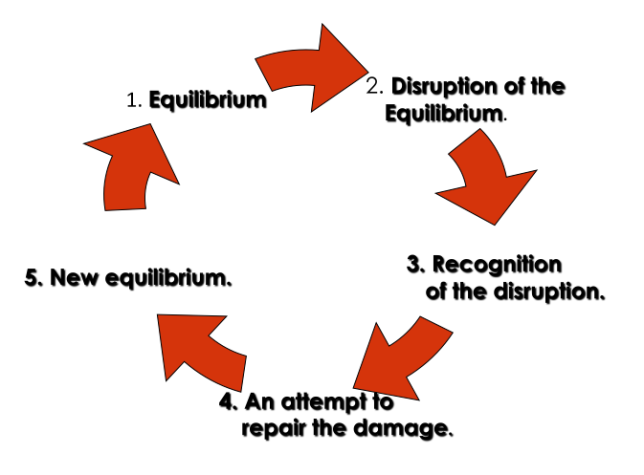
this clip shows the 5 stages of the narrative pattern: https://www.youtube.com/watch?v=SmGo0ph2prM
Roland Barthes’s – enigma codes- media theory
·
Enigma also known as mystery
·
Roland Barthe's: all texts are ‘complex’ bundles
of meaning. His meaning of this is that psychologically the films reflection
may not necessary reflect the meaning of the ‘complex’ of the film. An example
of this may be shown through the film of jaws... The concept of the film shows
us that it’s about various number of shark attacks from these in particular
sharks on a beach.

’
·
Enigma codes (problems introduce- usually in
disruption stage)
·
Open texts- not resolved at the end e.g. cliff
hanger
·
Closed texts – resolved at the end
·
Polysomic texts – lots of different meaning
This can be shown in the following clip: https://www.youtube.com/watch?v=_2Ecwm7Alrc
This can be shown in the following clip: https://www.youtube.com/watch?v=_2Ecwm7Alrc
Len Strauss- Binary opposites
·
He said narratives can be organised through
binary opposition – two things opposed – often dominant vs sub-dominant. Binary opposition's are sets of opposite values which reveal the structure of media programmes, film and texts. An example of this would be GOOD and EVIL . This theory also ties in with something called dominant ideology.Dominant ideology is the set of common values and beliefs shared by most people in a given society, framing how the majority think about a range of topics .This given that men have domination over women also further reflected and studied by Laura Mulvey
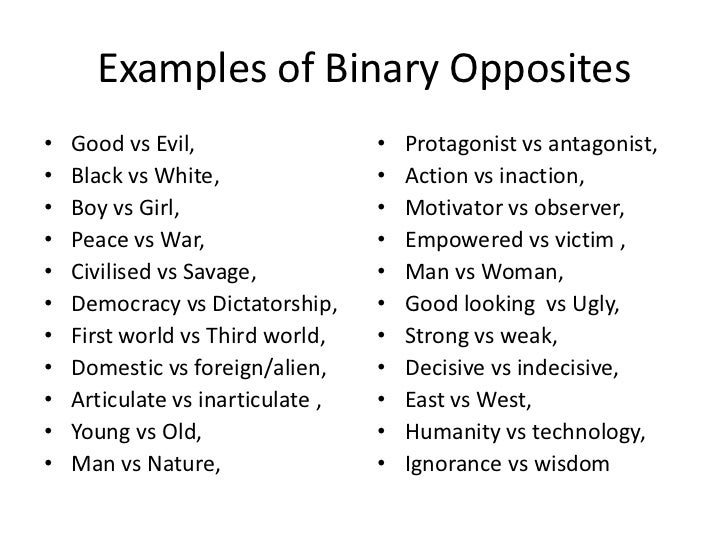
This theory can be shown in the following clip: https://www.youtube.com/watch?v=wq8NXOyCN5E
Vladimir Propp
· Vladimir Propp analysed hundreds of traditional Russian folk stories he stated that one character is able to perform as many roles as you want possible in your thriller. He defined all main characters are able to performing 8 broad character types. These types are listed below list the 8 character types
Character types
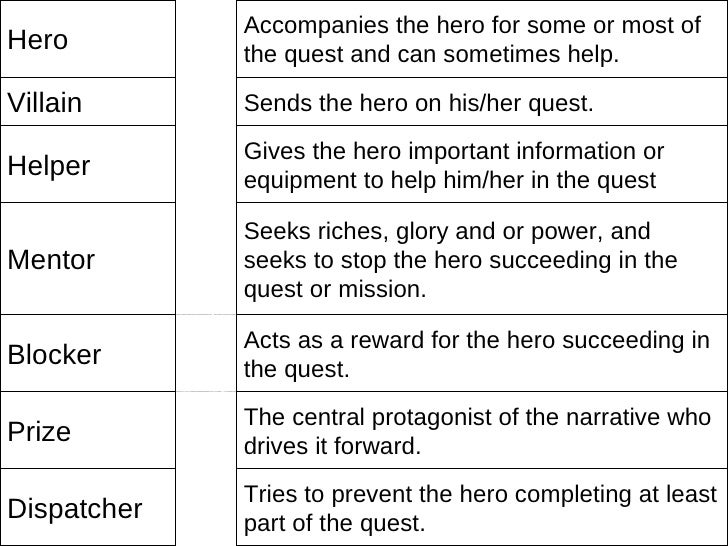
He also believed in the 31 functions: the following is a n example of the 31 functions:
- A member of a family leaves home (the hero is introduced as a unique person within the tribe, whose needs may not be met by remaining)
- An interdiction (a command NOT to do something e.g.'don't go there', 'go to this place'), is addressed to the hero;
- The hero ignores the interdiction
- The villain appears and (either villain tries to find the children/jewels etc; or intended victim encounters the villain);
- The villain gains information about the victim;
- The villain attempts to deceive the victim to take possession of victim or victim's belongings (trickery; villain disguised, tries to win confidence of victim);
- The victim is fooled by the villain, unwittingly helps the enemy;
- Villain causes harm/injury to family/tribe member (by abduction, theft of magical agent, spoiling crops, plunders in other forms, causes a disappearance, expels someone, casts spell on someone, substitutes child etc, commits murder, imprisons/detains someone, threatens forced marriage, provides nightly torments); Alternatively, a member of family lacks something or desires something (magical potion etc);
- Misfortune or lack is made known, (hero is dispatched, hears call for help etc/ alternative is that victimised hero is sent away, freed from imprisonment);
- Seeker agrees to, or decides upon counter-action;
- Hero leaves home;
- Hero is tested, interrogated, attacked etc, preparing the way for his/her receiving magical agent or helper (donor);
- Hero reacts to actions of future donor (withstands/fails the test, frees captive, reconciles disputants, performs service, uses adversary's powers against them);
- Hero acquires use of a magical agent (it's directly transferred, located, purchased, prepared, spontaneously appears, is eaten/drunk, or offered by other characters);
- Hero is transferred, delivered or led to whereabouts of an object of the search;
- Hero and villain join in direct combat;
- Hero is branded (wounded/marked, receives ring or scarf);
- Villain is defeated (killed in combat, defeated in contest, killed while asleep, banished);
- Initial misfortune or lack is resolved (object of search distributed, spell broken, slain person revived, captive freed);
- Hero returns;
- Hero is pursued (pursuer tries to kill, eat, undermine the hero);
- Hero is rescued from pursuit (obstacles delay pursuer, hero hides or is hidden, hero transforms unrecognisably, hero saved from attempt on his/her life);
- Hero unrecognised, arrives home or in another country;
- False hero presents unfounded claims;
- Difficult task proposed to the hero (trial by ordeal, riddles, test of strength/endurance, other tasks);
- Task is resolved;
- Hero is recognised (by mark, brand, or thing given to him/her);
- False hero or villain is exposed;
- Hero is given a new appearance (is made whole, handsome, new garments etc);
- Villain is punished;
- Hero marries and ascends the throne (is rewarded/promoted).
Representation of women in film
·
Laura Mulvey – the theory the male gaze “Visual pleasure and narrative cinema” 1975
Laura Mulvey – male gaze
Laura Mulvey sees the representation of women in film and literature as being dominated
Laura Mulvey sees the representation of women in film and literature as being dominated
by a males point of view. her belief is that the world is patriarchy and that men have active and women have passive roles. Mulvey proposed that films presented images of women that were produced simply for the gratification of men viewers She believed also that women were mainly viewed as the objects of male
erotic desire in film and audience and men outnumber women by far. Mulvey argued that we have no agency we don't have to plot forward. She argued that women were given two character types sexually active females and powerless, this is to outline the domination of men over women . If a women was given an important role when acting they were seen to be frightened, in need of protection and direction, not independent or self driven or generally weaker. She believed this was done to force the audience to identify the male gaze. She quoted
"Women, in any fully form, have almost completely been left out of film .... " L Mulvey..
·


Outstanding work. Very well done Verity.
ReplyDeleteMr Williamson